Do You Remove Ice Dams From Homes and Commercial Buildings?
Yes, we remove ice dams from houses, townhouses, condo buildings, churches, offices, and other commercial roofs. Tell us the building type and how many stories it is.
Ice Dam Removal Kings provides ice dam removal, ice dam steaming, and roof snow and gutter ice removal services in the Pekin, IL area for both residential and commercial properties. Contact us now for a free estimate.
Ice dam removal in Pekin, IL costs anywhere from $600 to $1,800 on average for steaming the ice dams off a typical house, which usually takes 2 to 4 hours. Most crews bill by the hour with a minimum. The price depends on the length of eaves and valleys, roof height and pitch, ice thickness, snow load, gutter ice, and how soon you need us.
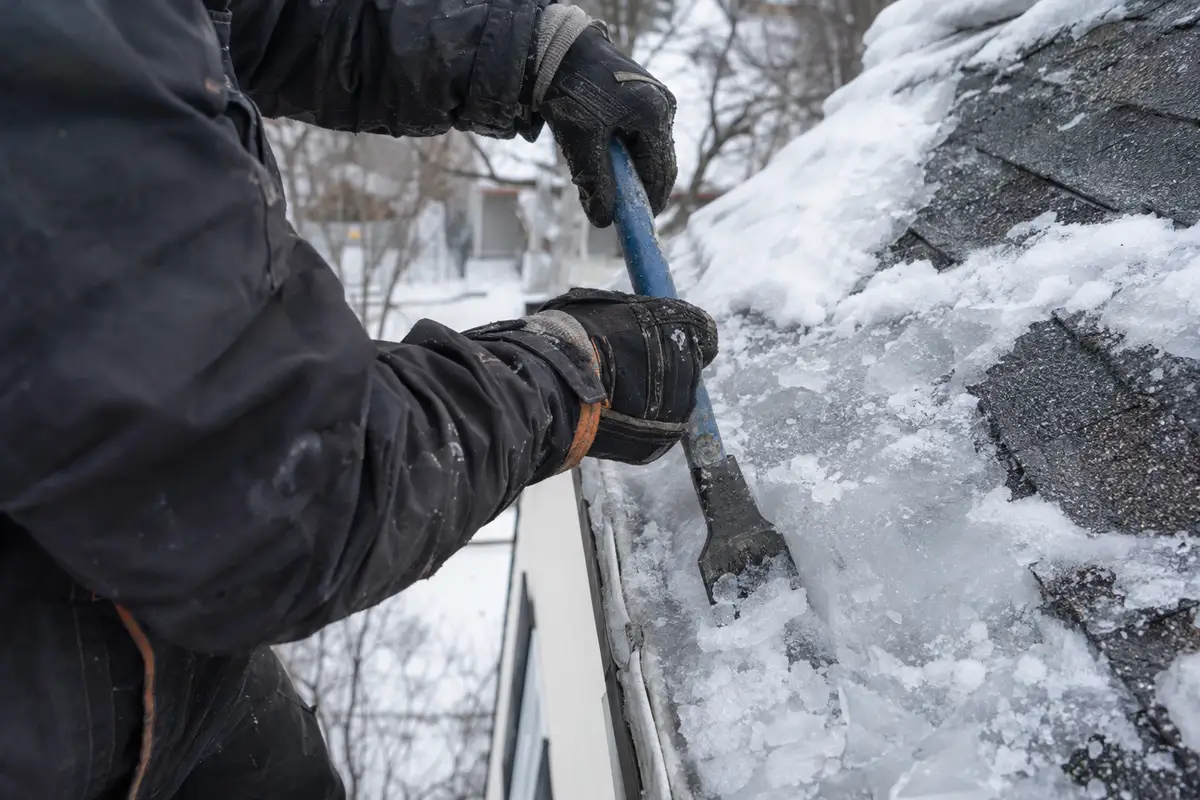
Yes, we remove ice dams from houses, townhouses, condo buildings, churches, offices, and other commercial roofs. Tell us the building type and how many stories it is.
Yes, we cover the Pekin, IL area. Send us the property address and we'll confirm.
Often the same day or the next day. Steam crews book up fast after a big storm, so call as soon as you see heavy icicles or water inside.
Yes, in most cases we work evenings and weekends during ice dam season when water is coming in. After-hours and holiday work often costs more, and we tell you the rate first.
Yes, if you see water stains, dripping, or ice forming on the siding or under the soffits. Water is already backing up behind the ice, so tell us that when you call.
Yes, sometimes it melts without trouble, but each thaw sends more water behind the ice and under the shingles. If the ice is thick, water is already inside, or more snow is coming, we'd steam it now.
We need the address, how many stories the house is, where the ice is, whether water is getting inside, and photos of the roof edge if you can take them safely from the ground.
Yes, in most cases our steamer draws water from your outdoor hose spigot. If it's shut off for winter, turn it back on for us and drain it afterward unless it's a frost-free faucet.
No, we can work while you're out or away as long as the spigot is on and we can reach the roof. If someone is home, it helps to have them watch the leak spots inside.
Yes, but the landlord or the condo association usually controls the roof and pays for the work, so get their OK first. We can coordinate directly with the property manager.
Yes, in most cases we bill steaming by the hour with a minimum, often about 2 hours. Steam crews typically charge around $300 to $700 per hour depending on the market and urgency.
Yes, we give you the hourly rate, the minimum, and an expected time range from your photos and roof size. The exact total depends on how thick the ice turns out to be under the snow.
No, not usually for routine removal, which insurers treat as maintenance. Many policies do cover the interior water damage, and some pay for removal needed to stop an active leak. We can give you photos and an invoice for your claim.
We finish most houses in 2 to 4 hours. A single short eave takes an hour or two, while a large or steep roof with thick ice can take us a full day or more.
Yes, we use low-pressure steam, which melts through the ice without blasting the shingles. We cut the dam into sections and clear it down to the roof surface.
No, steam used properly doesn't harm asphalt shingles. The damage people hear about comes from hammers, axes, chisels, and high-pressure washers, which crack shingles, strip granules, and tear gutters.
Clearing the full eave is better, because new ice builds on whatever is left. Channels cost less and get the water draining, and we'll do whichever you choose.
Yes, snow sitting on the dam has to come off before we can steam it. We can also clear more of the roof to slow new ice from forming, and that time is usually billed along with the steaming.
Yes, we work on two-story and taller roofs and steep pitches. Height and pitch add setup and safety time, so tell us the number of stories and whether the eaves sit over a walkout or deck.
Yes, valleys are one of the most common places ice backs up and leaks. They often hold the thickest ice, so they take longer than a straight eave.
Yes, we steam ice off standing seam and other metal roofs. Steam won't scratch the finish the way chipping does, and we keep rock salt off because it corrodes metal.
Yes, we clear ice around drains, scuppers, and roof edges on flat and low-slope roofs. Tell us where the water is pooling or coming in.
Yes, but slate and tile break easily underfoot, so we work from ladders or the edge where we can and go slower. Let us know the roof material when you call.
Yes, we steam out frozen gutters and open the downspouts so meltwater can drain. Heavy gutter ice can pull the gutter loose, so tell us if one is already sagging.
No, attic heat melting the roof snow causes them. Full gutters do give the ice more to build on.
Yes, gutter guards and helmets usually aren't a problem for us.
Yes, we steam around the cables and keep the steam off them. Heat cable only keeps a narrow drainage path open, so ice can still build up beside it.
Yes, we take down large icicles along with the dam. Thick icicles are a sign of an ice dam above them, so keep people out from under them until we arrive.
Yes, in most cases, since steam melts ice in freezing weather. We hold off if wind, heavy snowfall, or a slick roof makes it unsafe to be up there.
Put buckets and towels under the drips, move furniture and electronics away, and turn off any light fixture that's getting wet. Take photos of the damage for your insurance company.
No, not safely from a ladder or a snowy roof. Hammers crack shingles and pressure washers push water under them. Raking snow from the ground is fine, and we'll handle the ice.
No, rock salt damages shingles, metal gutters, and plants below. Calcium chloride in a sock laid across the dam can open a small channel until we get there.
No, they only melt a small round hole in the dam.
Yes, for a short time it may go from a slow drip to a steady one as trapped water drains. It usually slows quickly, and we can check with you inside as we go.
Yes, usually within a few hours of us opening a path for the water. Water already in the ceiling or walls can keep dripping for a while, so dry wet areas within 24 to 48 hours to keep mold from starting.
It lands in the yard and melts there. We clear chunks off driveways, walkways, and doorways so nobody trips or slips.
No, ice dam removal covers the ice and snow. If we see lifted shingles or loose gutters we point them out, and your roofer or restoration company handles the repairs.
Yes, they often return on the same eaves if heat keeps leaking into the attic. Clearing the full eave and the snow above it gives us the longest gap before new ice forms.
Keep the attic cold by air sealing the attic floor, adding insulation, keeping soffit vents open, and venting bath fans outside. Heat cables and roof raking only help water drain, and we can point out the eaves that ice up worst.
